



Imagine spending sixteen years learning how to learn. Syllabi. Rubrics. Tutors who held office hours. Lecturers who told you exactly what would come out in the exam, and a structured arc from ignorance to competence that was, if nothing else, legible. Then, on a Monday morning, sometime after your final convocation photo has been framed, you walk into a glass-fronted office in Tanjong Pagar or one-north or Raffles Place — and none of that exists anymore.
No rubric. No syllabus. No one who will sit with you and say: This is what good looks like.
Just a laptop, a Slack channel, and the unspoken expectation that you will figure it out.
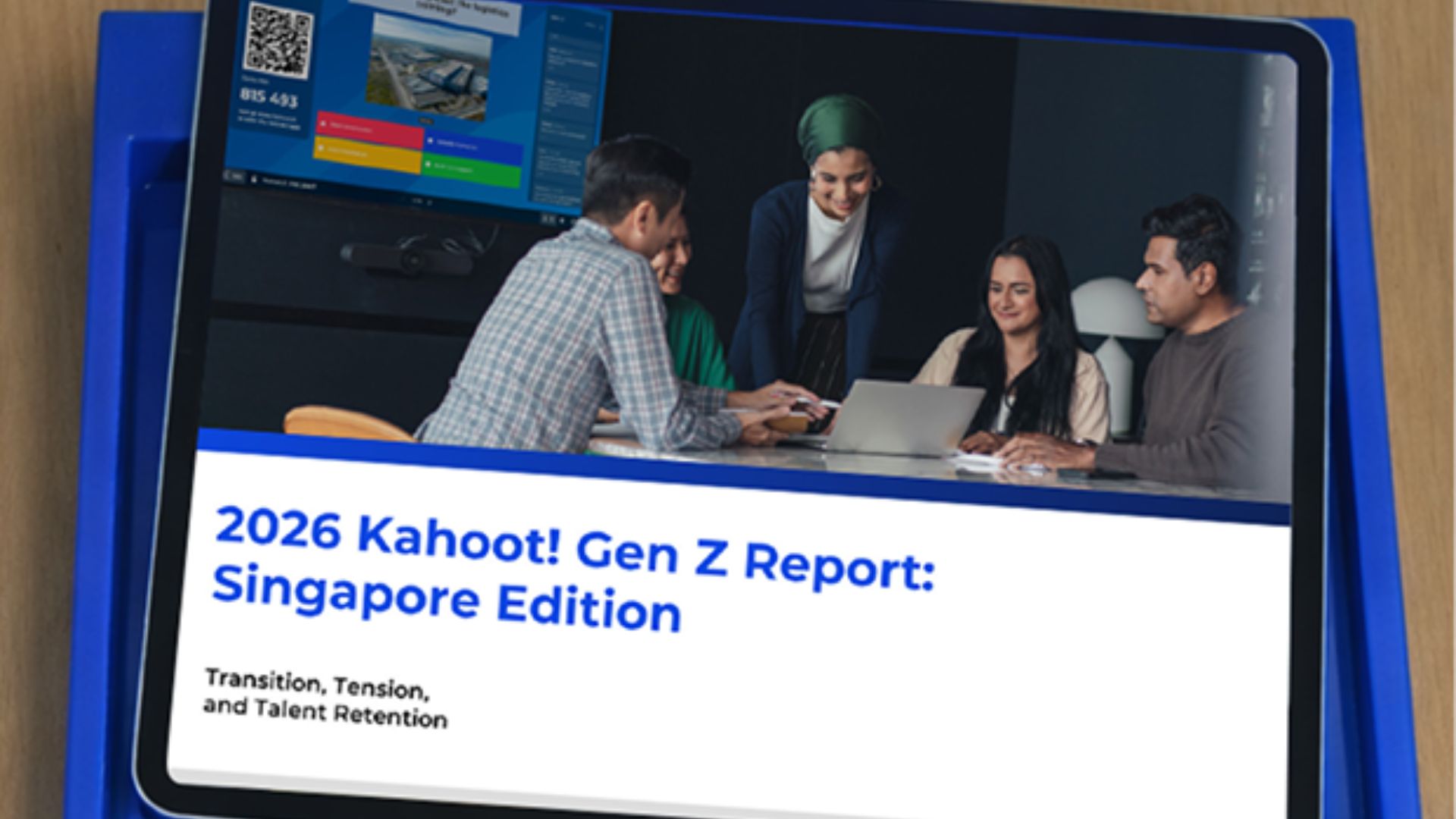
This is the quiet crisis at the heart of a new report released today by Kahoot!, the global learning and engagement platform. Titled Transition, Tension, and Talent Retention, the Singapore edition surveyed 265 Gen Z office workers — university graduates between one and three years into their corporate careers — and what it found should prompt some serious reflection from anyone who manages, hires, or leads young professionals in this city.
The Numbers Behind the Drift
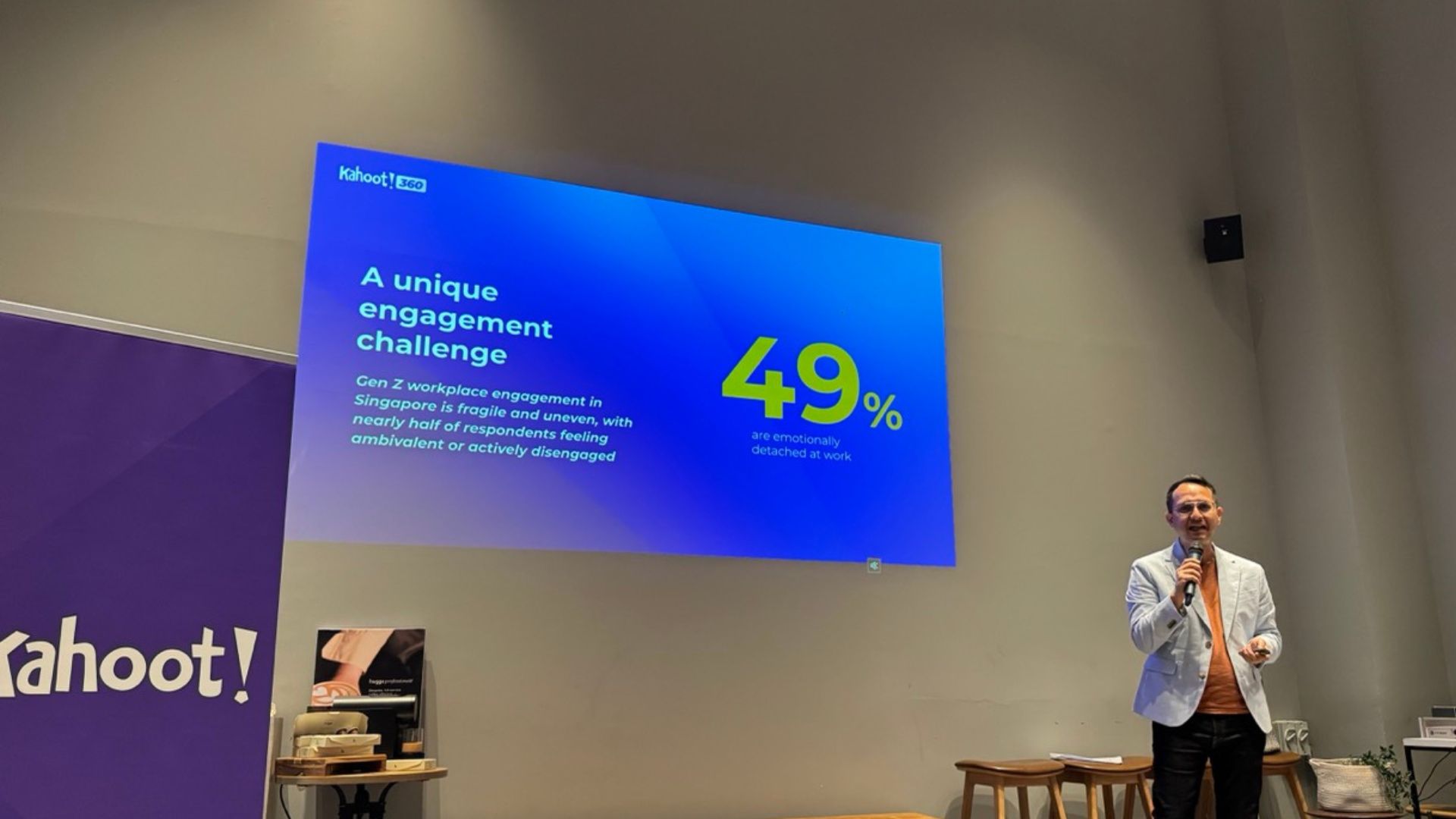
The headline statistic has already begun circulating: nearly half of Singapore’s Gen Z workforce — 49% — is either disengaged or emotionally neutral at work. But the more instructive finding, the one that tends to get buried beneath the alarm, is why.
It is not, the data suggests, that this generation doesn’t want to work hard. It is that more than half of them — 54% — say they have grown professionally mainly by learning from mistakes. Only 21% credit formal training. One in three learned primarily by watching senior colleagues handle difficult situations and hoping something transferred.
This is not a workforce that has been nurtured. This is a workforce that has been left to reverse-engineer the job.
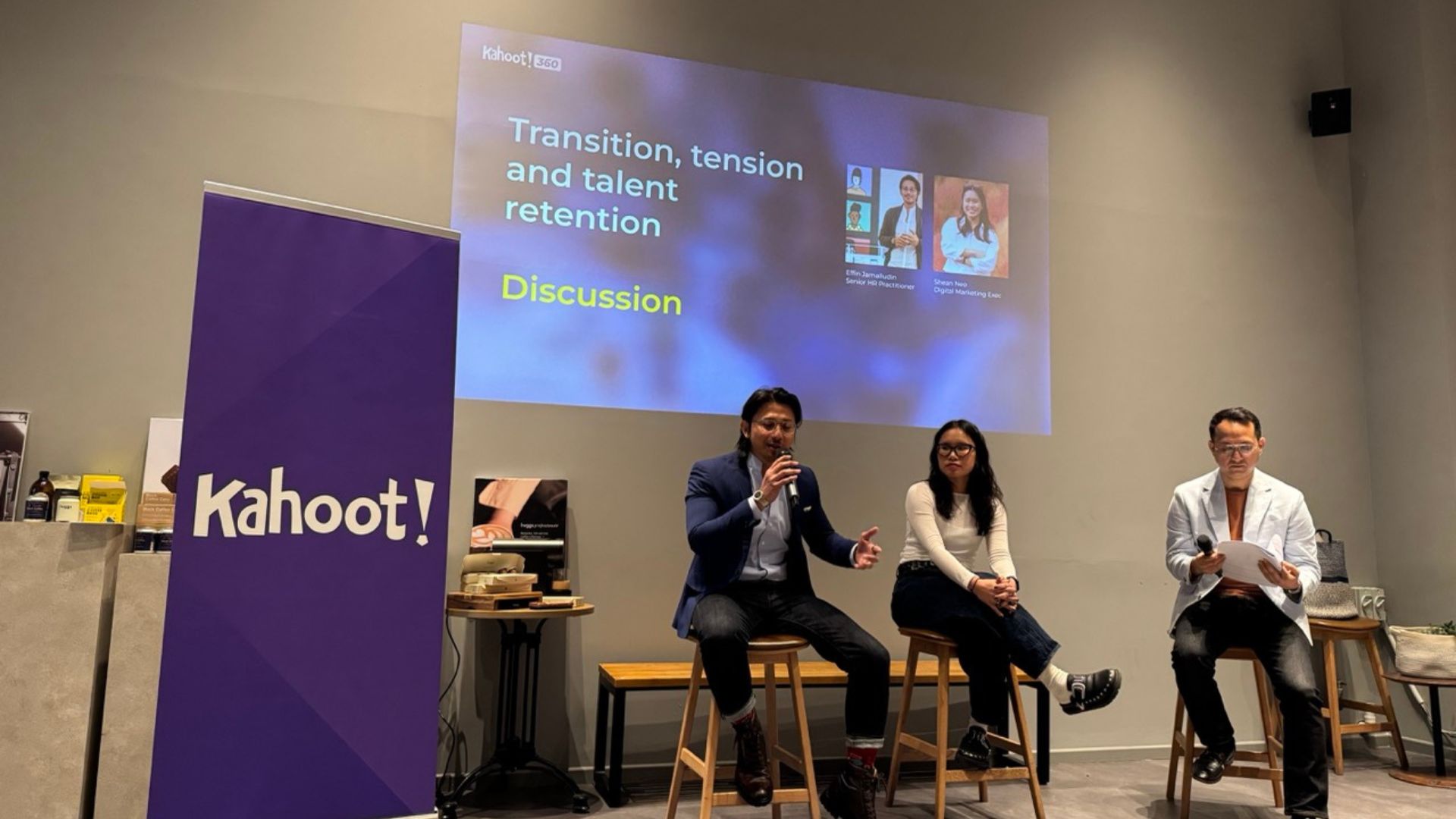
“Gen Z employees are asking for what they know works,” says Ahteram Uddin, Growth Director for Kahoot! in Asia and MENA. “Clearer expectations, structured onboarding, ongoing coaching, and learning experiences that are engaging, interactive, and connected to real work.”
What they are describing, in other words, is school. Specifically, the parts of school that worked.
The Syllabus They Never Got
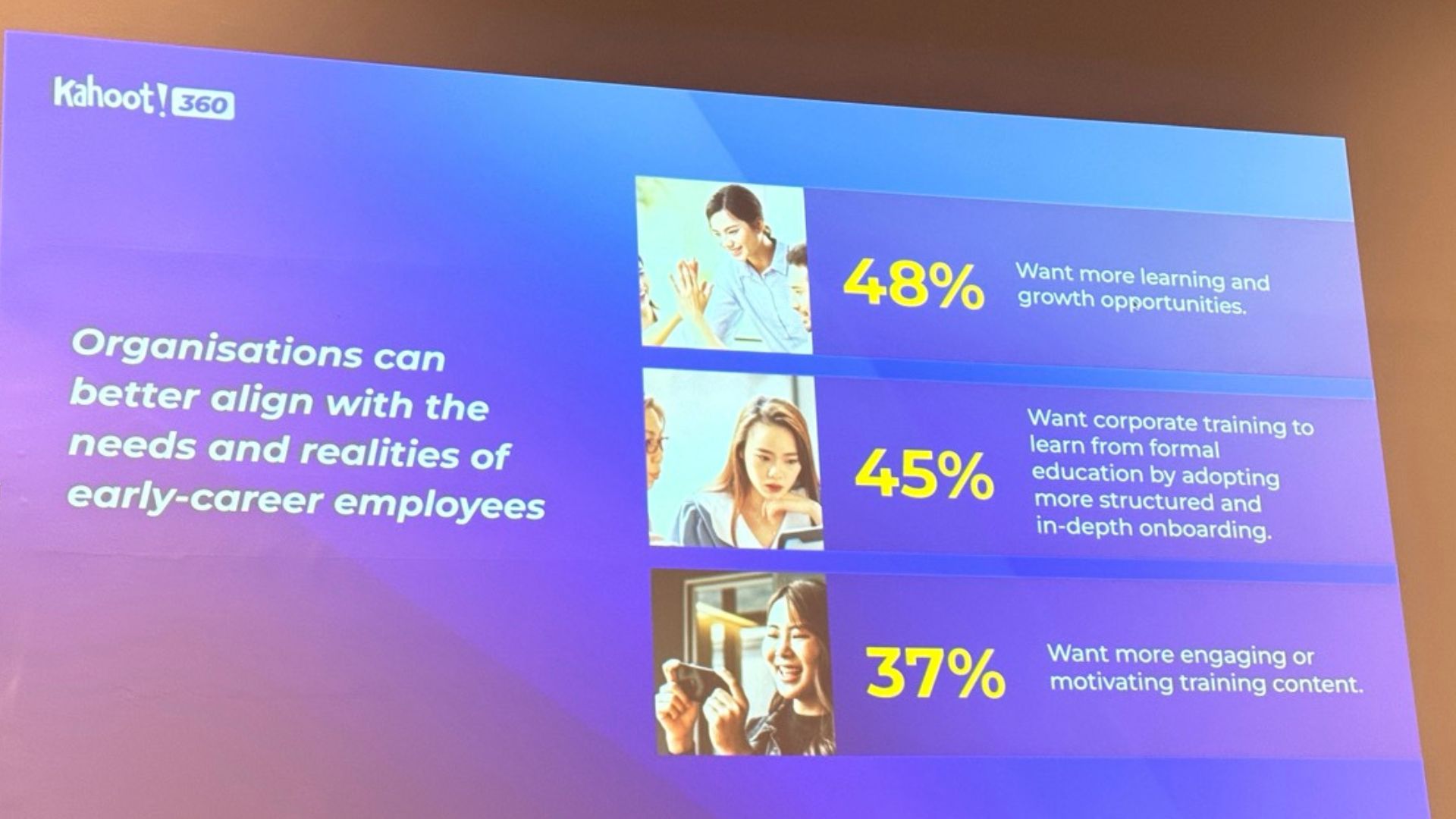
Ask a Gen Z employee what corporate training could borrow from formal education, and the answers are striking in their specificity. Forty-five per cent want more structured and in-depth onboarding — not a two-day orientation followed by an inbox full of policies to acknowledge, but something with weight and sequence and intention. Forty-four per cent want clear expectations and assessment criteria. Forty per cent want access to dedicated mentors, coaches, or peer trainers.
These are not demands for coddling. They are requests for the basic scaffolding of learning — the kind that universities provide as a matter of course, and that most workplaces have quietly decided isn’t their job.
The irony is that organisations spend considerable energy recruiting fresh graduates precisely because they are trainable, moldable, full of energy and ideas — and then hand them a compliance module and call it onboarding.
Only 29% of respondents described their mandatory workplace training as engaging or collaborative. Half said it was somewhat effective. More than a third said it was neither effective nor ineffective—a remarkable finding that suggests many young employees’ training experiences leave no lasting impression. It is information delivered and promptly forgotten. A box was checked on both sides of the desk.
The Boredom Barrier
Part of the problem is delivery. When asked what companies could improve about existing training, the single most common answer — cited by 37% of respondents — was more engaging or motivating content. Not more content. Not longer sessions. More alive content. Content that respects the fact that attention is finite, and that passive consumption is not the same as learning.
This is where the gamification conversation becomes interesting — and more nuanced than it might first appear. Forty-seven per cent of respondents said they were more likely to engage with content presented as a game, challenge, or friendly competition. But the press release that accompanied the report added an important qualifier: Gen Z does not reject gamification. They reject poorly executed gamification. Enthusiasm drops sharply when it feels forced, childish, or disconnected from the actual work.
This distinction matters. It means the answer is not to slap leaderboards onto existing content and declare the engagement problem solved. It means rethinking the architecture of learning itself — what it’s for, how it connects to the job, and whether the person on the receiving end can feel themselves getting better.
Beyond Training: The Belonging Problem
The training gap does not exist in isolation. It sits inside a broader experience of cultural dislocation that many young professionals carry quietly through their first years at work.
The report found that the most jarring culture shocks for new entrants were the expected fast pace of work (30%), the sense that success depends more on politics than merit (27%), and the dominance of seniority in decision-making (26%). Nearly a quarter were surprised by the expectation to be contactable around the clock.
What makes these findings particularly significant in a Singapore context is the inherited weight of deference. The report notes that traditional hierarchical norms — common across many Asian workplaces — can make open feedback feel less instinctive. Only 9% of respondents said they felt very comfortable giving feedback to a manager or senior colleague. The rest were operating somewhere between cautious and silent.
Into this environment, the request for clearer expectations and more structured guidance takes on additional meaning. It is not just a learning preference. It is, for many, the only safe path forward in an organisation where asking directly feels like overstepping.
What Organisations Can Do — and Why Now
Singapore is not facing a Gen Z problem. It is facing a retention and readiness problem that Gen Z is making visible.
These workers are set to become the largest generation in the local workforce within a decade. They are entering a labour market where the Singapore National Employers Federation has already flagged attracting and retaining PMETs as one of the defining challenges of 2025. And they are arriving with a clear and articulate sense of what they need, which is more than most employers ever get from a new cohort.
The report’s prescription is, at its core, straightforward: treat the first year of employment with the same intentionality that universities treat the first year of a degree. Define the milestones. Name the expectations. Provide real coaches, not just org charts. Make training something a person can feel working on them.
“Organisations must rethink how they approach learning and development,” Uddin says, “not as an act of compliance or a concession, but as an invaluable strategic driver of retention and performance.”
Gen Z came into the workforce having spent their entire lives in structured learning environments. They are not asking for their hands to be held indefinitely. They are asking for a map at the start — something that shows them where they are, where they are going, and what the terrain looks like in between.
That is not an unreasonable thing to ask of the people who hired you.
The 2026 Kahoot! Gen Z Report: Singapore Edition, titled ‘Transition, Tension, and Talent Retention’, was conducted by Milieu in January 2026. The study surveyed 265 Gen Z office workers in Singapore aged 18–28 who had been in corporate employment for between 12 and 36 months.
RELATED: The DJI Air 3S: Redefining Aerial Creativity and Safety
Join the conversations on TheHomeGround Asia’s Facebook and Instagram, and get the latest updates via Telegram.